.png)
.png)
.png)
.png)
Tacrolimus binds to an intracellular protein, FKBP-12. A complex of tacrolimus-FKBP-12, calcium, calmodulin, and calcineurin (a ubiquitous mammalian intracellular enzyme) is then formed, after which the phosphatase activity of calcineurin is inhibited. Such inhibition prevents the dephosphorylation and translocation of various factors such as the nuclear factor of activated T-cells (NF-AT), and nuclear factor kappa-light-chain enhancer of activated B-cells (NF-κB). Tacrolimus inhibits the expression and/or production of several cytokines. Tacrolimus also inhibits IL-2 receptor expression and nitric oxide release, induces apoptosis and production of transforming growth factor beta that can lead to immunosuppressive activity. The net result is the inhibition of T-lymphocyte activation and proliferation, as well as T-helper-cell-dependent B-cell response (i.e., immunosuppression).

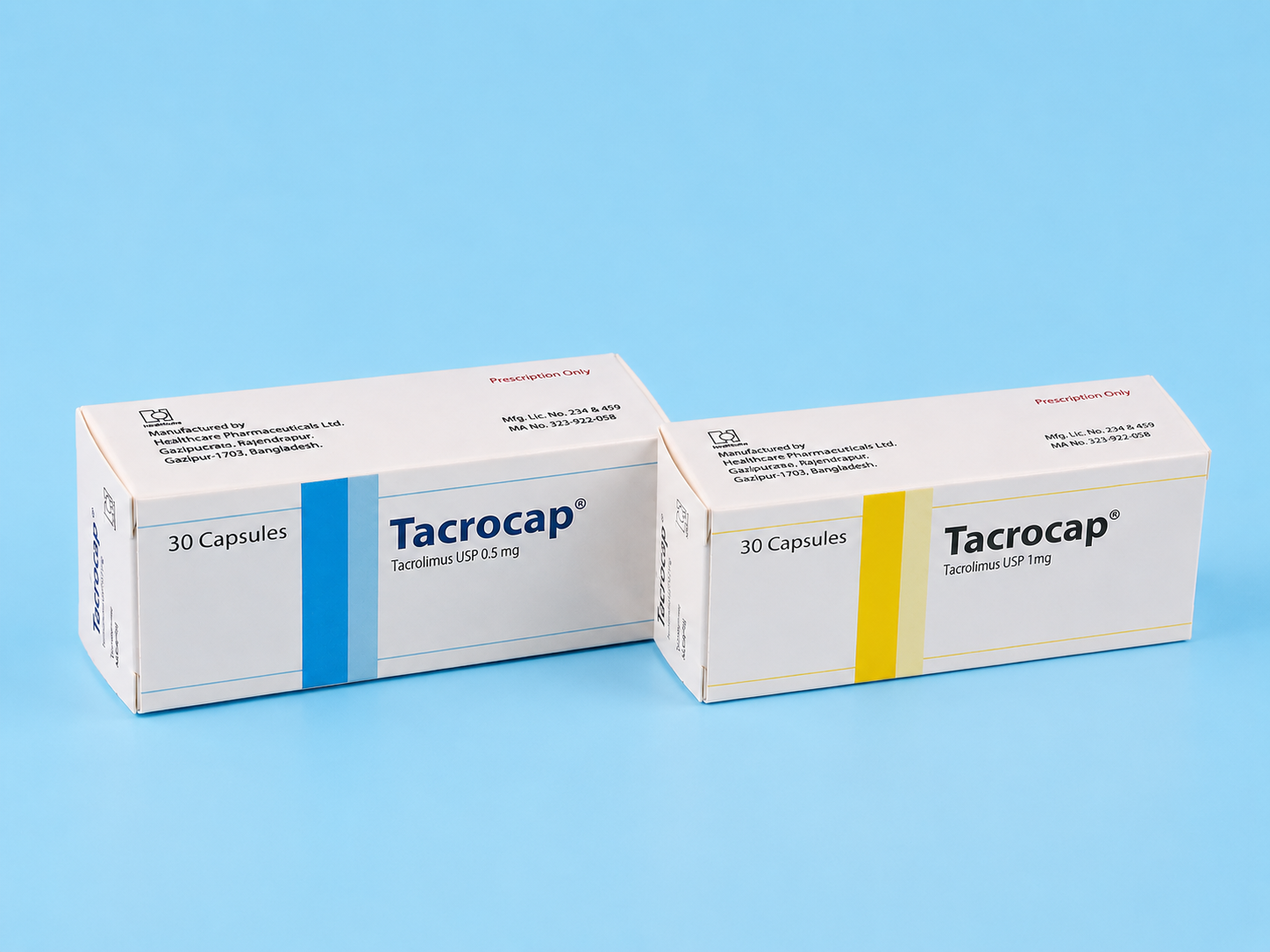
Tacrocap is a calcineurin-inhibitor immunosuppressant indicated for the prophylaxis of organ rejection in adult and pediatric patients receiving allogeneic liver, kidney, heart, or lung transplants, in combination with other immunosuppressants.
For adult kidney, liver, heart, or lung transplant patients, the initial dose of Tacrocap capsules should be administered no sooner than 6 hours after transplantation in liver, heart, or lung transplant patients. In kidney transplant patients, the initial dose may be administered within 24 hours after transplantation, but should be delayed until renal function has recovered.
In kidney transplant patients receiving Azathioprine, the recommended initial oral dosage is 0.2 mg/kg/day divided into two doses administered every 12 hours, with a whole blood trough concentration range of Month 1-3: 7-20 ng/mL and Month 4-12: 5-15 ng/mL. For kidney transplant patients receiving MMF/IL-2 receptor antagonist, the recommended dose is 0.1 mg/kg/day divided into two doses every 12 hours, with a trough concentration range of Month 1-12: 4-11 ng/mL. Liver transplant patients receiving corticosteroids only should receive 0.10-0.15 mg/kg/day divided into two doses every 12 hours, maintaining a trough concentration range of Month 1-12: 5-20 ng/mL. Heart transplant patients receiving Azathioprine or MMF should receive 0.075 mg/kg/day divided into two doses every 12 hours, with a trough concentration range of Month 1-3: 10-20 ng/mL and Month ≥ 4: 5-15 ng/mL. Lung transplant patients receiving Azathioprine or MMF should also receive 0.075 mg/kg/day divided into two doses every 12 hours, with a trough concentration range of Month 1-3: 10-15 ng/mL and Month 4-12: 8-12 ng/mL. Patients with cystic fibrosis may require higher doses due to lower bioavailability. A dose of 0.1 mg/kg/day is recommended if antibody induction treatment is administered.
For pediatric kidney, liver, heart, or lung transplant patients, higher tacrolimus doses are generally required compared to adults, although the dose requirement may decrease as the child grows older. Pediatric kidney transplant patients should receive 0.3 mg/kg/day divided into two doses administered every 12 hours, with a whole blood trough concentration range of Month 1-12: 5-20 ng/mL. Pediatric liver transplant patients should receive 0.15-0.2 mg/kg/day divided into two doses every 12 hours, maintaining a trough concentration range of Month 1-12: 5-20 ng/mL. Pediatric heart transplant patients should receive 0.3 mg/kg/day divided into two doses every 12 hours with a trough concentration range of Month 1-12: 5-20 ng/mL. Pediatric lung transplant patients should receive 0.3 mg/kg/day divided into two doses every 12 hours, with a trough concentration range of Week 1-2: 10-20 ng/mL and Week 2 to Month 12: 10-15 ng/mL.

Dosage Modification for Patients with Renal Impairment: For patients with pre-existing renal issues after liver, heart, or lung transplants, start Tacrocap at a lower dose and adjust as needed. For kidney transplant patients with post-operative oliguria, give the first dose 6-24 hours after surgery or when renal function improves.
Dosage Modification for Patients with Hepatic Impairment: In severe hepatic impairment (Child-Pugh ≥ 10), lower Tacrocap doses may be needed with close blood concentration monitoring.

Hypersensitivity to tacrolimus or HCO-60 (polyoxyl 60 hydrogenated castor oil).

• Not Interchangeable with Extended-Release Tacrolimus Products
• New Onset Diabetes After Transplant: Monitor blood glucose.
• Nephrotoxicity (acute and/or chronic): Reduce the dose.
• Hyperkalemia: Monitor serum potassium levels.
• Not recommended for use with sirolimus.
• Myocardial Hypertrophy: Consider dose reduction/discontinuation.
• Immunizations: Avoid live vaccines.
• Pure Red Cell Aplasia: Consider discontinuation of Tacrocap.

The most common adverse reactions (≥ 15%) were abnormal renal function, hypertension, diabetes mellitus, fever, CMV infection, tremor, hyperglycemia, leukopenia, infection, anemia, bronchitis, pericardial effusion, urinary tract infection, constipation, diarrhea, headache, abdominal pain, insomnia, paresthesia, peripheral edema, nausea, hyperkalemia, hypomagnesemia, and hyperlipidemia.

• Mycophenolic Acid Products: Can increase MPA exposure after crossover from cyclosporine to Tacrocap; monitor for MPA-related adverse reactions and adjust MMF or MPA dose as needed.
• Nelfinavir and Grapefruit Juice: Increased tacrolimus concentrations via CYP3A inhibition; avoid concomitant use.
• CYP3A Inhibitors: Increased tacrolimus concentrations; monitor concentrations and adjust tacrolimus dose as needed.
• CYP3A4 Inducers: Decreased tacrolimus concentrations; monitor concentrations and adjust tacrolimus dose as needed.

Pregnancy: Tacrocap can cause fetal harm. Advise pregnant women of the potential risk to the fetus.
Use in Children and Adolescents: Safety and effectiveness have been established in pediatric liver, kidney, heart, and lung transplant patients.
Geriatric Use: Dose selection for an elderly patient should be cautious, usually starting at the low end of the dosing range.

Acute overdoses of up to 30 times the intended dose of Tacrocap have been reported, Symptoms observed included tremors, abnormal renal function, hypertension, and peripheral edema, with rare instances of transient urticaria and lethargy.

Store at temperature not exceeding 25°C in a dry place. Protect from light and moisture.