.jpg)
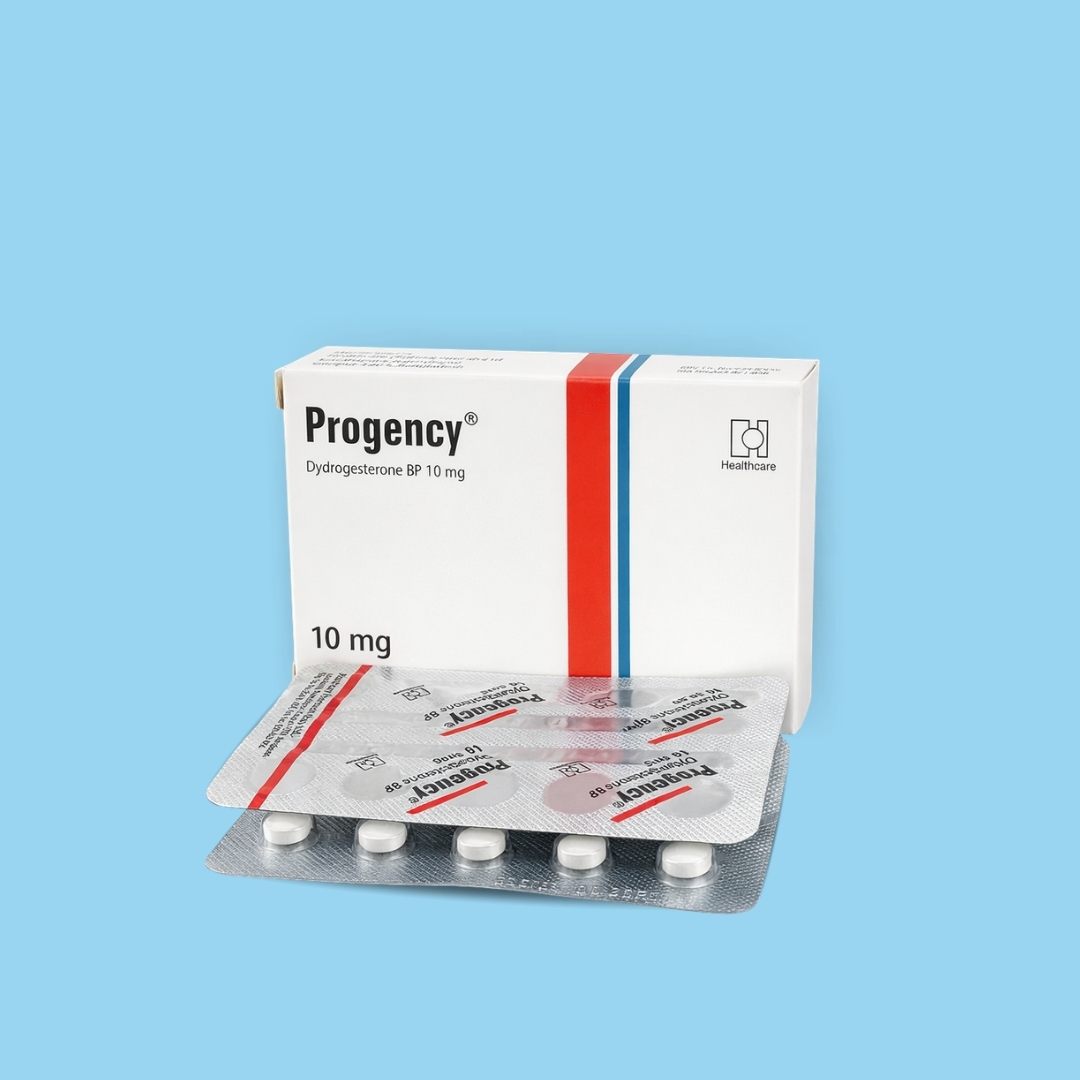
Each film-coated tablet contains:
Dydrogesterone BP 10 mg
Dydrogesterone is a selective oral progestogen that mimics the biological effects of natural progesterone without androgenic or estrogenic activity. It helps convert the estrogen-primed endometrium into a secretory state, thereby maintaining hormonal balance and supporting reproductive health.

Dydrogesterone is an orally active progestogen that acts specifically on the endometrium. It produces a full secretory transformation of the estrogen-primed uterus, thereby reducing the risk of endometrial hyperplasia and carcinogenesis associated with unopposed estrogen therapy. Unlike some other progestogens, dydrogesterone does not possess estrogenic, androgenic, thermogenic, anabolic, or corticosteroid effects. This selective action makes it particularly suitable for treating conditions related to endogenous progesterone deficiency while maintaining a favorable safety profile.

Progency Tablet is indicated in conditions associated with progesterone deficiency, including:
Threatened miscarriage
Habitual or recurrent miscarriage
Dysmenorrhoea (painful menstruation)
Endometriosis
Secondary amenorrhoea
Irregular menstrual cycles
Dysfunctional uterine bleeding
Infertility due to luteal insufficiency
Luteal phase support during Assisted Reproductive Technology (ART)
It is also used in Hormone Replacement Therapy (HRT) in combination with estrogen to protect the endometrium in women undergoing treatment for menopausal symptoms.

The dosage of Progency depends on the condition being treated and should be determined by a physician.
For progesterone deficiency conditions:
Threatened miscarriage: Initial dose of 40 mg followed by 10 mg every 8 hours until symptoms improve.
Habitual miscarriage: 10 mg twice daily until the 20th week of pregnancy.
Dysmenorrhoea: 10 mg twice daily from day 5 to day 25 of the menstrual cycle.
Endometriosis: 10 mg two or three times daily from day 5 to day 25 of the cycle or continuously.
Dysfunctional uterine bleeding: 10 mg twice daily for 5–7 days to control bleeding.
Amenorrhoea: Combined with estrogen therapy; 10 mg twice daily from day 11 to day 25 of the cycle.
Infertility due to luteal insufficiency: 10 mg daily from day 14 to day 25 of the cycle for at least six consecutive cycles.
For luteal support during Assisted Reproductive Technology (ART), 10 mg three times daily may be started on the day of oocyte retrieval and continued if pregnancy is confirmed.

Although formal interaction studies are limited, certain medicines may reduce the effectiveness of dydrogesterone by increasing its metabolism. These include enzyme-inducing drugs such as phenobarbital, phenytoin, carbamazepine, rifampicin, and herbal preparations containing St. John’s Wort. Patients should inform their physician about all medications they are taking to avoid potential interactions.

Progency should not be used in patients with:
Known hypersensitivity to dydrogesterone or any tablet components
Known or suspected progestogen-dependent tumors
Undiagnosed abnormal vaginal bleeding
Active thromboembolic disorders
Severe hepatic disease or liver tumors
History of cholestatic jaundice or severe liver dysfunction

Progency is generally well tolerated; however, some patients may experience mild to moderate adverse effects. Commonly reported side effects include headache or migraine, nausea, menstrual irregularities, and breast tenderness. Less frequently, dizziness, skin rash, mood changes, or fluid retention may occur. Severe reactions are rare but should be evaluated promptly by a healthcare professional.

Dydrogesterone has been widely used during pregnancy to support progesterone deficiency conditions, and current evidence does not indicate harmful effects on the fetus when used as prescribed. However, it should only be taken during pregnancy under medical supervision. Dydrogesterone may pass into breast milk; therefore, the use of Progency during breast-feeding is generally not recommended unless advised by a physician.

Before initiating treatment, the cause of abnormal vaginal bleeding should be carefully evaluated. Breakthrough bleeding or spotting may occur during the first months of therapy. Patients should seek medical evaluation if bleeding persists or occurs after discontinuation of therapy.
Special caution is advised in patients with a history of liver disease, depression, thromboembolic disorders, or hypertension. Regular medical monitoring may be required during long-term treatment or when used as part of hormone replacement therapy.

Dydrogesterone is generally well tolerated even at higher doses. No specific antidote exists. In the event of overdose, treatment should be symptomatic and supportive. Gastric lavage may be considered if ingestion is recent.

Store below 30°C in a dry place, protected from light.
Keep out of the reach of children.